REVIEW · COOKING CLASSES
Pure Bali Village Experience, Cooking & Jamu Class+VIP Transfer
Book on Viator →Operated by Balikaru · Bookable on Viator
This Bali day smells like herbs. It blends hands-on jamu making, a cooking class at Paon Bali, and real village life in the Batukaru area.
You’re not rushing through another shopping loop. You’re walking through rice country, meeting people and farm details, then sitting down to lunch you prepared yourself.
I like the way it keeps the group small (max 12), so you actually get time to ask questions while you cook and taste. I also love that the day has variety: Rindik instrument intro, an herb garden tour with 40+ plants, and even a mountain Belulang hot spring finish.
One thing to consider: it’s a full day with walking and a soft downhill trek (about 30 minutes). If you hate stairs, uneven paths, or early starts, you’ll want to plan carefully.
In This Review
- Key highlights at a glance
- Your day starts with VIP-style pickup and a mountain drive
- Rindik music at the village: a culture intro, not a filler talk
- The herb and spice garden: 40+ plants that explain the flavor and the medicine
- Crafting jamu at the Jamu Pavilion: tasting what visitors miss
- Paon Bali cooking class: live bamboo grill energy and real steps
- Rice planting help and the Balikaru farm details: active, hands-on, real
- Village stroll and Asta Kosala architecture: seeing Bali’s design logic
- Belulang hot spring and optional purification: the calm finish
- Price ($89) and whether it feels like value
- Practical tips so the day goes smoothly
- Who should book this Pure Bali Village Experience
- Should you book Pure Bali Village Experience, Cooking & Jamu Class plus VIP transfer?
- FAQ
- How long is the tour?
- What’s included for pickup and transport?
- How big is the group?
- What food and drinks are included?
- Is the hot spring included?
- Do you offer dietary accommodations?
- Do I get any certificate after the class?
- What language will the guide speak?
- Is cancellation free?
- Can service animals join?
Key highlights at a glance
- Small-group pace (max 12) for hands-on cooking and jamu tasting without getting lost in the crowd
- Herb & spice garden tour featuring 40+ plant varieties used for Balinese remedies and flavor
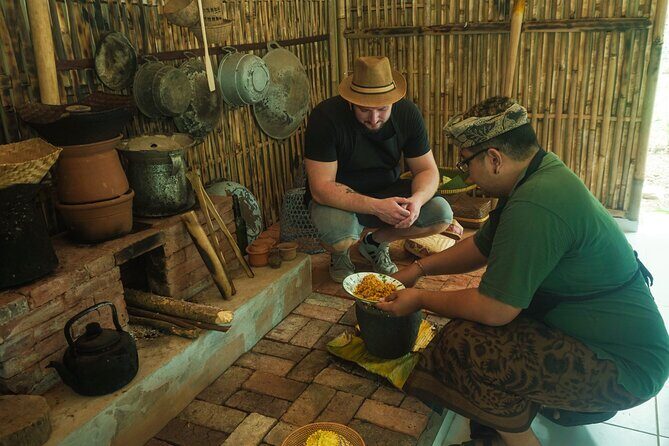
- Paon Bali bamboo-grill cooking with live steps for dishes like Sate Lilit and dessert Lak Lak
- Village participation including helping with rice planting and time near animals and stingless Trigona beehives
- Belulang hot spring stop with an optional bath and a sacred-feeling end to the day
Your day starts with VIP-style pickup and a mountain drive
This experience is built around an early start and a car ride out of Bali’s busiest zones. The package includes pickup and drop-off, plus an air-conditioned vehicle. That matters more than it sounds: you’re saving energy for the parts that need it—walking, cooking, and tasting.
You’ll also get a scenic drive with a photo stop. I like this because it gives you a quick reset before the village time kicks in. It’s much easier to notice details when you’re not already rushed and sweating.
One practical note: your start time is 7:30am, so set your morning routine early. Bring water (drinks aren’t included) and keep your camera handy, especially if you enjoy mountain views.
If you're still narrowing it down, here are other tours in Bali we've reviewed.

Rindik music at the village: a culture intro, not a filler talk
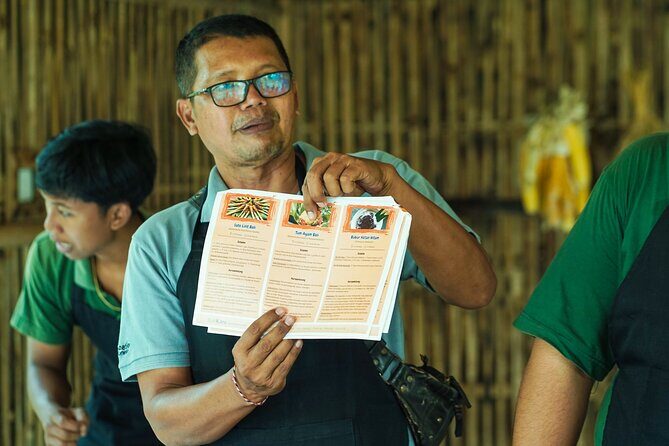
Once you arrive in the mountain village area, the day begins with a leisurely walk and an introduction to the Rindik. This is a traditional Balinese instrument, and the point here isn’t to turn you into a musician. It’s to give you context for how village culture works—music, rituals, and daily life moving together.
The vibe tends to be relaxed at this stage. You’re outside, you’re looking at how people live, and you’re getting a cultural anchor before food and herbs take over the schedule.
If you’ve ever taken a cooking class that felt like a separate world from the culture, this step is the opposite. It’s a reminder that the plants you’ll learn about and the meals you’ll cook are part of a living system.
The herb and spice garden: 40+ plants that explain the flavor and the medicine
Next comes a guided walk through an herb & spice garden with over 40 varieties of plants. This is where the day starts teaching, in a real-world way, not a lecture way.
Why it’s valuable: Bali’s herbal drinks and cooking don’t separate ingredients from purpose. Many plants are used for taste and for traditional health beliefs—so when you later make jamu, you’re not guessing. You’ve already seen where things come from and what they’re used for.
The tour leads into the jamu portion at the Jamu Pavilion. So think of the garden as your map. If you like food science, you’ll enjoy this. If you just want to eat well, it still helps you understand why the flavors make sense.
Crafting jamu at the Jamu Pavilion: tasting what visitors miss
Most Bali visitors pass over jamu. Here, you don’t just hear about it—you craft and taste 2 types of jamu at the Jamu Pavilion, and you’ll also do fruit tasting.
Jamu is often described as an ancient and powerful health drink, but the bigger “for you” benefit is this: you get to experience it as something that’s made locally, not bottled and sold as a souvenir. It’s hands-on and practical. You’ll learn how herbs get turned into something you can drink right there.
This is also a good moment to ask questions. Since the group is small, your guide can explain what’s typical, what surprises people, and what flavors to expect from each mix. If you’re adventurous, this is one of the most memorable stops.
Paon Bali cooking class: live bamboo grill energy and real steps
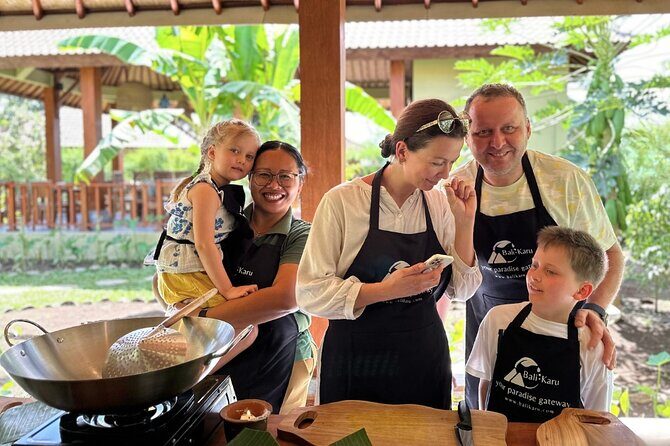
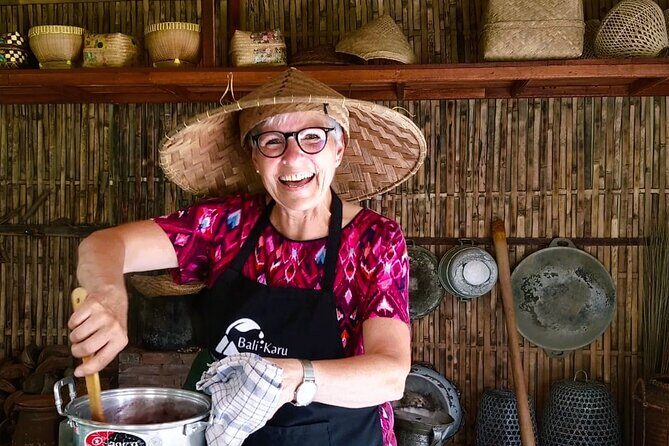
Then you move to Paon Bali, the open-air Bali kitchen. This part is the heart of the day: you cook an authentic Balinese meal with guidance from the chef, and you’ll spend extra time at the live bamboo grill station.
Here’s what stands out:
- You’ll learn a dish like Sate Lilit, made at the grill station.
- You’ll also make Lak Lak, a Balinese dessert using a traditional clay pot.
- Your lunch is Nasi Campur Tumping plus dessert, and you eat what you cooked.
I like the structure because it’s not just chopping and watching. You’re part of the process—hands doing the work, and your instructor correcting or guiding as needed.
A balanced expectation: if you’re expecting a high-end restaurant meal, you may find it simpler and more rustic. But the payoff is authenticity and the fact that your lunch has your fingerprints on it, not just your order number.
And don’t overlook the open-air setting. It’s part of the value. You’re learning cooking methods that make sense for local life.
Other cultural village experiences in Bali
Rice planting help and the Balikaru farm details: active, hands-on, real
After lunch, you’ll have enough energy for a helping-hand moment: planting rice with the farmer. Even if you’ve never done farm work before, this tends to be fun because it’s physical and immediate. You’re not just learning about nature—you’re interacting with it.
Then there’s a stop at the Balikaru farm, where you’ll see animals and stingless Trigona beehives. Stingless bees can sound like a trivia fact, but it’s actually useful. It gives you a sense of the local ecosystem and why certain plants and routines matter.
If you’re thinking about family fun, this is also where kids and curious adults often perk up—because it shifts from kitchen mode into nature mode.
One consideration: wear shoes you don’t mind getting a little dirty. This part of the day rewards comfortable footwear more than stylish sandals.
Village stroll and Asta Kosala architecture: seeing Bali’s design logic
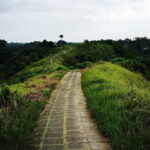
Once the work and farm time are done, you stroll through the village with mountain views and chat with locals. This is the slower, reflective slice of the day. It’s also when you start noticing how everyday living fits with landscape and spirituality.
You’ll also visit a traditional house to learn about Asta Kosala architecture, which is influenced by Balinese Feng Shui. If you like cultural details, this stop pays off. It’s not abstract—it’s about how physical spaces get organized according to beliefs.
This is where the experience becomes more than food. You’re seeing how people think about space, function, and spiritual balance in daily life.
Belulang hot spring and optional purification: the calm finish
To end the day, you go to Belulang hot spring. Bathing is marked as optional, but the location itself is part of the appeal. After cooking, walking, and rice planting, the hot spring gives you that reset that makes the day feel complete.
Some versions of the experience also include a spiritual purification ceremony connected to this sacred setting. If that option is available on your day, I recommend taking it seriously. It can turn the hot spring stop from just relaxing into a more meaningful cultural moment.
Either way, plan to cool down after you finish. You’ll likely be warm, tired, and hungry again, even if lunch was filling.
Price ($89) and whether it feels like value
At $89 per person for an 8-hour day, you’re paying for more than a cooking class. You’re getting:
- Hotel pickup and drop-off (the time and hassle savings are real)
- A small-group experience (max 12)
- A full herb-and-jamu segment with plant education and tasting
- An active cooking class at Paon Bali with dishes you make yourself
- Rice planting assistance and farm time, including stingless Trigona beehives
- A village walk plus a traditional house stop focused on Asta Kosala
- A finish at Belulang hot spring (optional bath)
So does it feel worth it? For most people who want culture + food + hands-on activity in one day, yes. If you only care about eating one meal, you could probably find a cheaper cooking class. But if you want the full village-to-kitchen-to-nature arc—and you don’t want to coordinate transport yourself—this price starts to make sense fast.
Also, you receive a farewell gift and a personal cooking class certificate by email after the tour. Certificates are usually fluff, but I do like this because it gives you a record of what you learned, especially if you plan to cook some of it at home.
Practical tips so the day goes smoothly
A few details help you get the most out of the day without stress:
- Bring water since drinks aren’t included.
- Wear comfortable shoes for walking and the downhill trek (about 30 minutes).
- If you’re vegetarian or have dietary needs, you can be accommodated—just tell the operator during booking.
- The guide is English- or German-speaking (other languages may cost extra), so plan your language expectations accordingly.
- The tour allows service animals, which is good to know if you need that support.
If you’re the type who hates feeling like you’re always in someone else’s schedule, this might still feel like a “lot.” But the day is organized around real activities, so the pace doesn’t feel random.
Who should book this Pure Bali Village Experience
This tour fits you best if you want:
- Hands-on food and drink learning (jamu + cooking you actually do)
- A break from over-touristed Bali routines, with mountain-area village life
- A mix of culture and activity: instrument intro, herbs, rice work, farm animals, and hot spring time
You might reconsider if:
- You have low mobility or fear uneven paths (there’s walking and a downhill trek)
- You want a slow, lounging day with minimal exertion
- You’re not interested in any spiritual or traditional elements (there’s an optional purification moment for some schedules)
Should you book Pure Bali Village Experience, Cooking & Jamu Class plus VIP transfer?
If your ideal Bali day includes learning real ingredients, cooking with a chef, and seeing how village life connects to food and rituals, I think this is a smart choice. The small group and the door-to-door pickup/drop-off make it feel efficient, not exhausting.
My advice: book this when you want something more grounded than a checklist day. It’s one of those experiences where you leave with both memories and practical skills—jamu tasting knowledge and meal-making confidence.
FAQ
How long is the tour?
The experience runs for about 8 hours.
What’s included for pickup and transport?
You get hotel pickup and drop-off in an air-conditioned vehicle, plus a scenic drive and a photo stop on the way.
How big is the group?
The tour is limited to a maximum of 12 travelers, so you get more hands-on time.
What food and drinks are included?
You’ll have lunch: Nasi Campur Tumping + dessert, and you’ll also craft and taste 2 types of jamu plus fruit tasting.
Is the hot spring included?
Visit to the Belulang hot spring is included, and the bath is optional.
Do you offer dietary accommodations?
Yes. You can request vegetarian or other dietary needs at the time of booking.
Do I get any certificate after the class?
Yes. You’ll receive a personal cooking class certificate by email after the tour.
What language will the guide speak?
The guide is English- or German-speaking, and other languages may have a surcharge.
Is cancellation free?
Free cancellation is allowed up to 24 hours in advance for a full refund. If it’s canceled due to poor weather, you’ll be offered another date or a full refund.
Can service animals join?
Yes. Service animals are allowed.