If you want ocean time without scuba, this is it. In Nusa Dua, Bali Seawalker lets you walk the seafloor with a clear underwater helmet and air from the surface. It is a hands-on way to see coral and lots of fish up close, with professional guidance and hotel transport.
I like that there is no scuba certification required, so you can focus on the experience instead of training. I also like the simple structure: wetsuit and boots first, safety briefing, then about 20 minutes underwater at roughly 7–8 meters.
One thing to consider: you have to equalize your ears while you go down, and if you are sensitive to pressure, it may feel uncomfortable. Also, the helmet gear is described as older by one reviewer, so go in with expectations that this is practical, not fancy.
In This Review
- Key Highlights You’ll Actually Care About
- Seawalker in Nusa Dua: What This Experience Feels Like
- How the 1.5-Hour Schedule Works (and Where It Can Slow Down)
- Safety Briefing, Helmet Fit, and Ear Equalizing Tips
- Walking the Seafloor at Tanjung Benoa: Fish, Coral, and Photo Spots
- Getting More Thrills: Parasailing or Jet Ski Upgrades
- What’s Included for Your $55, and What Costs Extra
- Who Should Book Seawalker (and Who Might Skip It)
- Practical Advice Before You Go
- Should You Book Bali Seawalker?
- FAQ
- Do I need scuba certification to do Bali Seawalker?
- How deep do I go, and how long am I underwater?
- What age limits apply?
- What’s included in the $55 price, and what costs extra?
- What health or medical limits should I know about?
- Can I cancel for a full refund?
Key Highlights You’ll Actually Care About
- No scuba certification needed: you get an underwater walk with guidance and hand signals
- 7–8 meters max depth with air pumped from the surface through the helmet
- About 20 minutes underwater for close-up coral and fish viewing
- Hotel pickup and drop-off from key south Bali locations, plus lockers on-site
- Upgrades available like parasailing or a Jet Ski add-on
- Age range is clear: minimum 12, adults up to 70
Seawalker in Nusa Dua: What This Experience Feels Like
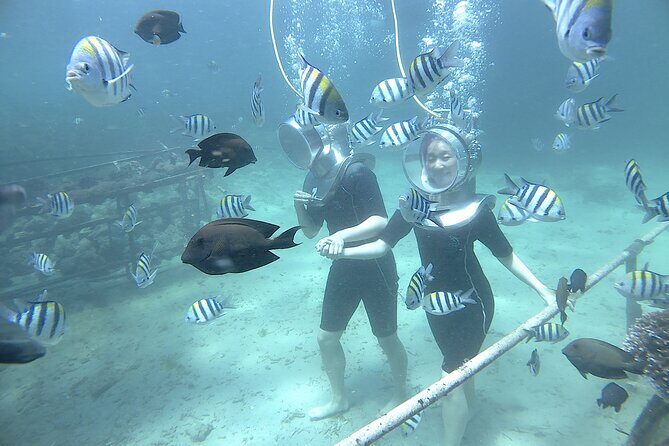
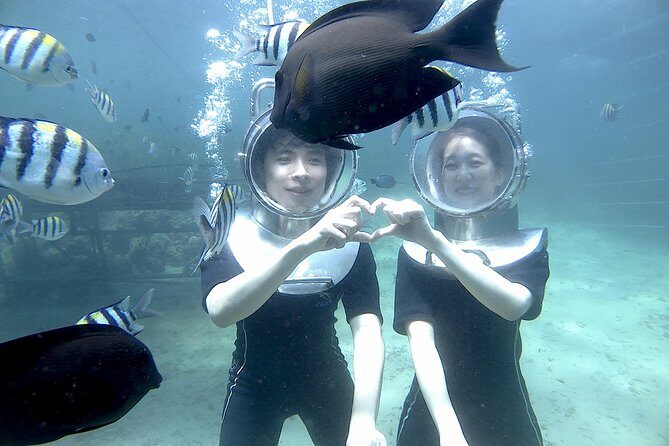
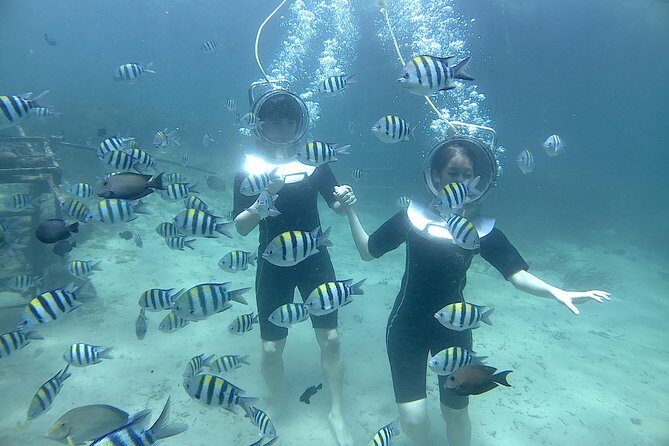
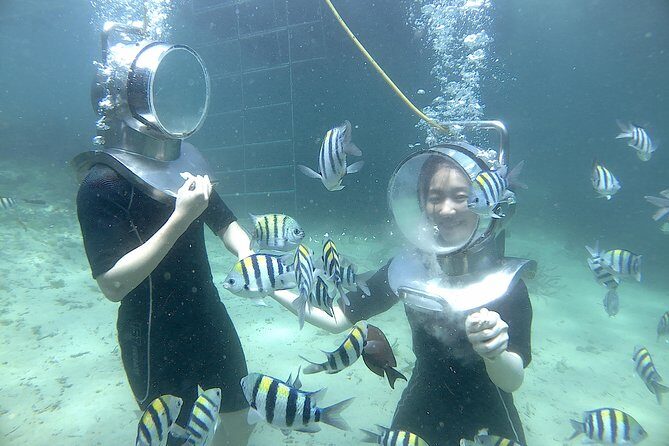
Bali Seawalker is built for people who want the ocean look and the thrill, but not the scuba certification process. You suit up in a required wetsuit and boots, then step into a clear stainless-steel shield helmet that lets you see everything around you while air is fed from above. The goal is simple: move around on the seabed and watch fish and coral at close range without needing scuba skills.
The experience is designed to be guided and controlled. You get instruction on hand signals, ear equalization, and emergency procedures before you start your underwater session. That matters because you are not just watching from a distance—you’re physically moving in a breathing helmet, and you’ll want to know exactly how to communicate and what to do if anything feels off.
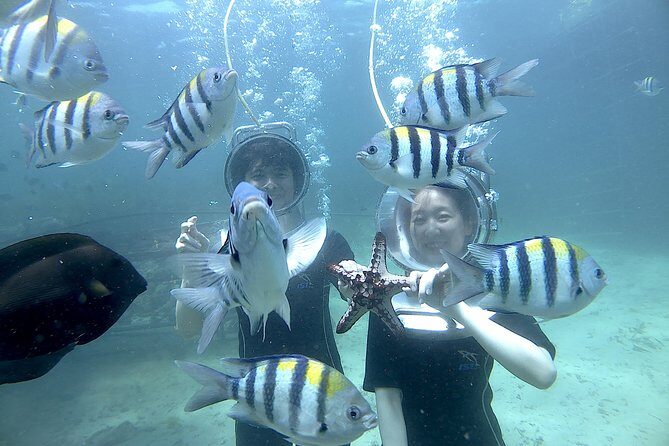
You’ll also learn what to expect visually. One of the biggest reasons people book Seawalker is the easy photo setup: the coral reef is close to shore, and Blue Beach is noted as one of the best photo spots with colorful fish swimming near you. Expect fish like angelfish, butterfly fish, parrot fish, and lion fish during the session.
If you're still narrowing it down, here are other tours in Nusa Dua we've reviewed.


How the 1.5-Hour Schedule Works (and Where It Can Slow Down)
The total time on the activity is listed at about 1 hour 30 minutes, and the underwater portion is roughly 20 minutes. The rest is the setup: getting in, filling out safety info, fitting you with gear, briefing you, and then returning you to your hotel. It usually runs smoothly, but your timeline can shift with weather, since dive times are approximate and subject to conditions.
Your day starts with hotel pickup and drop-off from key south Bali areas. That is one of the practical advantages here—Nusa Dua can be spread out, and you do not want to spend your limited vacation time wrangling transport to a coastal meeting spot. You also get air-conditioned vehicle time, plus lockers on-site, which is helpful when you’re carrying sunglasses, a towel, and a change of clothes.
The underwater session itself is the main event and the moment most people remember. Even if you’re not comfortable with pressure changes, the structure usually makes it manageable because the crew will coach you on what to do. Still, keep a bit of patience in your day for the hand-signal practice and ear equalization.
If you are the type who hates waiting around, arrive ready and on time. You’ll likely spend that extra time being fitted and checked, not stuck twiddling your thumbs.
Safety Briefing, Helmet Fit, and Ear Equalizing Tips
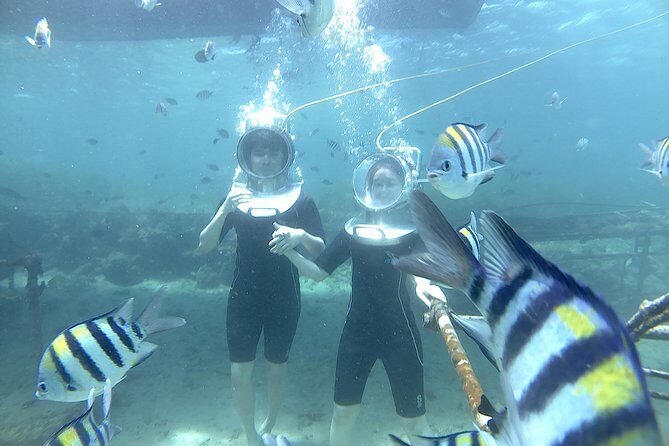
Before you go underwater, you complete a safety information form and then receive a detailed briefing from the instructor. You’ll be taught hand signals, how to equalize your ear pressure, and the emergency safety procedure. That training is not a formality. It is what helps the whole activity stay calm and controlled.
You’ll also need to wear the right protection: a special wetsuit and boots are required to safeguard you from biota that may be disturbed, such as jellyfish or other small marine life. It is a good reminder that this is not a beach stroll. You are stepping into an environment where your presence matters, and the gear helps keep you safe while minimizing disturbance.
Ear equalization is the part you should take seriously, especially if you have ever had ear issues with elevators, flights, or pool pressure. One reviewer flagged popping ears as a minor problem. That lines up with what you’d expect when you go from air to underwater depth. The best approach is to follow the instructor’s pacing and signals, not to push your body through discomfort.
One more practical note: your success underwater depends on comfort with the helmet and breathing setup. You’ll breathe normally through the system, but you may feel awkward at first. Give yourself a few moments to settle, then focus on steady movement and watching what’s around you.
Walking the Seafloor at Tanjung Benoa: Fish, Coral, and Photo Spots
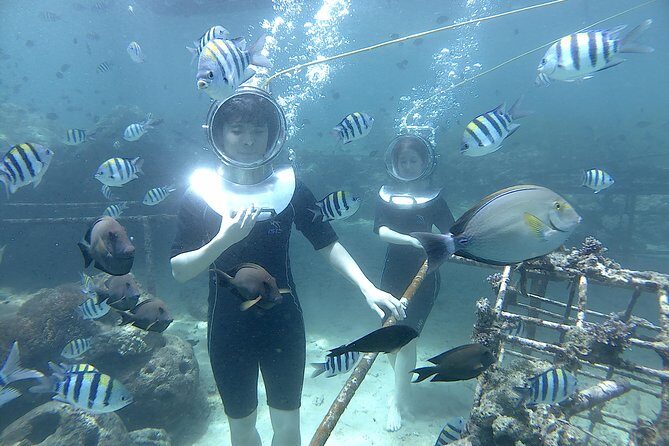
Your underwater adventure happens at Tanjung Benoa, where you walk on the Balinese sea floor at about 7 to 8 meters. The helmet is clear, so you can look around freely while air is pumped from the surface. You get roughly 20 minutes underwater, which is enough time to take in the scenery without feeling rushed.
This is one of the reasons Seawalker works well for first-timers. Coral reef is close to shore, so you’re not spending your time searching. Instead, the fish are right there, swimming in your viewing range. Expect close-up views of coral reef and tropical fish, with angelfish, butterfly fish, parrot fish, and lion fish highlighted as common sightings.
Blue Beach is repeatedly framed as the best place for photos because the fish come closer and the reef visibility is strong. If photography matters to you, treat the session like a guided photo walk: keep your posture steady, move slowly, and use the instructor’s cues to stay in the best viewing area.
There is also an upgrade reality check: souvenir photos and GoPro camera options may cost extra. One reviewer explicitly recommended paying extra for the GoPro camera. If you’re the type who always regrets not getting underwater photos, plan ahead so you’re not stuck browsing add-ons after the session.
Getting More Thrills: Parasailing or Jet Ski Upgrades
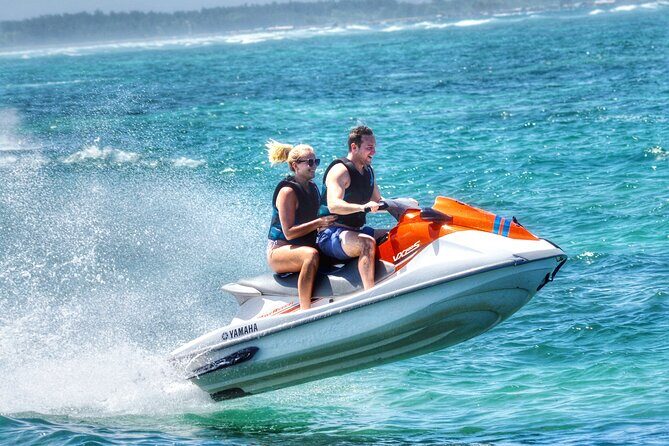
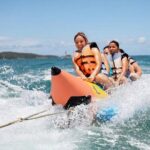
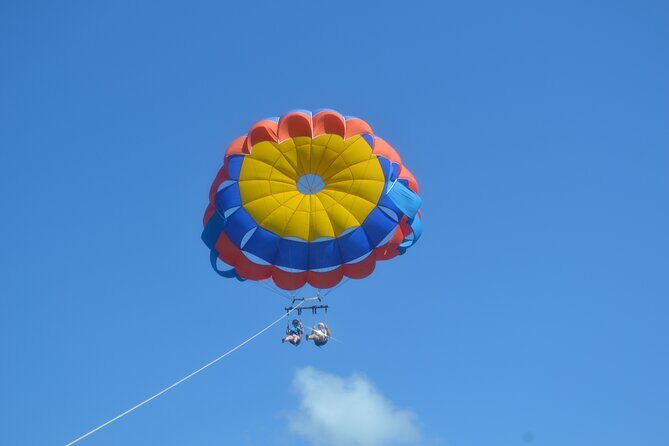
Bali Seawalker includes the option to upgrade your experience. You can add parasailing or ride a Jet Ski as an add-on adventure. This is where you can tailor the day: keep it as a calm underwater walk, or turn it into a more action-heavy outing.
One data point to keep in mind: Jet Ski rides are under 17 years old with an instructor when selected as an add-on. If you’re traveling with teens, this is a key detail for planning and avoiding surprises at the activity level.
If you are deciding between upgrades, think about what kind of day you want. Seawalker is controlled and guided. Parasailing and Jet Ski shift the vibe toward speed and motion. It is doable to combine activities, but don’t schedule anything demanding back-to-back afterward. Your body (and your hair, if you care) may need some decompression time.





What’s Included for Your $55, and What Costs Extra
At $55 per person, the main value is access. You are getting a guided underwater walk with helmet air, required protective gear, and transportation, without needing scuba certification. For many people, that removes the biggest friction point of ocean activities: training time and training cost.
What’s included:
- Hotel pickup and drop-off
- Use of the helmet
- Air-conditioned vehicle
- Lockers
What’s not included:
- Souvenir photos (available to purchase)
- Alcoholic drinks (available to purchase)
Upgrades also cost extra, including parasailing or Jet Ski.
One smart way to judge value: add up what you’d otherwise pay for transport plus a guided snorkeling or scuba-style setup. Here, you get transport, gear use, and guided safety training wrapped into one price. If you also want photos, the decision becomes whether you want to pay for the additional photo/video options. One reviewer noted that equipment might feel older and there can be ear popping, but they still called the overall experience worth it.
Also consider timing value. On average, this is booked 49 days in advance. That suggests demand is steady, so the earlier you lock it in, the less likely you are to face limited choices during your travel window.
Who Should Book Seawalker (and Who Might Skip It)
This activity is offered with clear boundaries. Minimum age is 12, and the maximum age listed is up to 70 years old. If you’re traveling with a kid who is old enough and comfortable with instructions, this can be a strong alternative to scuba-style experiences.
It is also a good option if you:
- Want to see reef and fish up close without scuba certification
- Prefer a guided, structured session over self-paced snorkeling
- Like the idea of being supported with hand signals and safety coaching
You should think twice, or speak with your doctor first, if you have pre-existing medical conditions. The activity requires a health questionnaire, and some conditions—such as asthma or heart conditions—may prevent you from diving/walking underwater. The important part is you do not want to guess. If you’re unsure, check with a medical professional before your trip.
Also note the flight timing caution: diving within 48 hours of flying is not recommended. If you’re arriving from far away and going straight into the ocean, you’ll want to plan your schedule so you have a gap.
Finally, think about comfort with pressure. If you know you struggle with equalization, prepare yourself for potential ear popping. Following the instructor’s guidance is your best bet for making it through comfortably.
Practical Advice Before You Go
Because the activity involves wetsuit gear and an underwater helmet, you’ll enjoy it more if you show up ready. Wear swimwear under your clothes so you can get suited quickly. Bring a towel and a dry set of clothes for after the session, since you’ll be returning to your hotel soon after.
If you care about photos, decide ahead of time if you want the onboard photo or GoPro option. One reviewer specifically encouraged paying extra for the GoPro camera, and it’s easy to see why: underwater moments vanish fast, and you can’t easily shoot great images when you’re focused on staying balanced and following hand signals.
Also, go in knowing that you’re in a group setting with a maximum of 65 travelers. That is big enough for variety in schedules and coaching attention, but small enough to keep things organized. Expect a friendly, safety-minded operation rather than a private, luxury setup.
If weather affects timing, be flexible. Your water time is tied to conditions, so plan not to stack other water activities back-to-back on the same day.
Should You Book Bali Seawalker?
Book Seawalker if you want a real ocean experience without the scuba hurdle. The combo of no scuba certification, clear underwater helmet viewing, guided safety briefing, and hotel transport makes the $55 price feel more like access than a bargain you’ll regret.
Skip it (or ask more questions first) if you know you’re sensitive to pressure in your ears, or if you have any medical condition that could affect breathing or underwater activity. And if you want a modern, pristine equipment feel, remember that at least one reviewer described the equipment as a bit old—this is a functional setup built to get you underwater safely.
For most people visiting Nusa Dua, though, Seawalker hits a sweet spot: fish and coral close to shore, a structured walkthrough, and a memorable story you can tell without needing advanced training.
FAQ
Do I need scuba certification to do Bali Seawalker?
No. The experience is designed so you can walk the sea floor without a scuba certification. You’ll get a detailed briefing on safety procedures and hand signals before going underwater.
How deep do I go, and how long am I underwater?
You explore underwater to a depth of about 7 to 8 meters, and the underwater experience is about 20 minutes.
What age limits apply?
Children must be at least 12 years old. Adults up to 70 years old can participate.
What’s included in the $55 price, and what costs extra?
Included are hotel pickup and drop-off, helmet use, air-conditioned vehicle, and lockers. Not included are souvenir photos and alcoholic drinks. Parasailing or Jet Ski can be added as upgrades.
What health or medical limits should I know about?
You must complete a health questionnaire before participating. Some pre-existing conditions, such as asthma or heart conditions, may prevent you from participating, so check with your doctor if you have concerns.
Can I cancel for a full refund?
Yes. You can cancel up to 24 hours in advance for a full refund. If you cancel less than 24 hours before the start time, the amount paid is not refunded.