REVIEW · KUTA
Besakih Temple Tour,Kehen Temple,Tirta Empul,Goa Gajah Temple
Book on Viator →Operated by Sari Nusa Penida Tour · Bookable on Viator
Temple-hopping in Bali, all day. I like how this tour stitches together Besakih Temple and Tirta Empul Temple with private transfers, so you can focus on the spiritual scenes instead of figuring out tight roads.
My favorite part is the human side: a professional English-speaking driver and guidance that helps you understand what you’re looking at. With Mr. Agus behind the wheel, the day feels calm and well managed, not chaotic.
The main catch is simple: it’s long. At about 10 hours, expect plenty of walking and stairs, especially at Gunung Kawi and Goa Gajah, so wear good shoes and keep a moderate fitness level.
In This Review
- Key things I’d plan for
- Temple-Day Value: What This Tour Really Gets You
- Price and What You Still Pay at the Temples
- Getting Ready: Shoes, Sarong, and How “Moderate Fitness” Feels
- Kehen Temple: A Royal Temple Built for Power and Ceremony
- Besakih Temple: The Mother Temple on the Volcano Slopes
- Tirta Empul Temple: Sacred Springs and Watching Purification Up Close
- Gunung Kawi Sebatu: The Rocky Temple and the Step-Heavy Path
- Goa Gajah (Elephant Cave): Elaborate Carvings and an Archaeological Feel
- Driving, Timing, and Why This Feels Less Stressful Than Self-Driving
- Cultural Notes That Make Your Visit Feel Respectful
- Who This Tour Is Best For (and Who Should Skip It)
- Should You Book This Temple Route?
- FAQ
- Are entrance fees included in the tour price?
- How long is the tour?
- Is pickup and drop-off included?
- Is this a private tour or shared group?
- What’s included in the price?
- What is not included?
- Do I need a sarong or special clothing for the temples?
- Is free cancellation available?
- Does the tour run in any weather?
Key things I’d plan for

- Five major temples in one organized day: Kehen, Besakih, Tirta Empul, Gunung Kawi Sebatu, and Goa Gajah in a single loop.
- Private, door-to-door transfers: You get picked up and returned from your hotel area, which saves stress.
- Tirta Empul’s purification ritual is the star: Watch worshippers use the sacred springs, in a place with strong local meaning.
- Besakih’s Mother Temple setting: A large complex on the slopes gives you big-scope views and a sense of scale.
- Stairs and uneven temple terrain: The route works best with comfortable shoes and patience.
- Entrance fees are extra: The package covers logistics and transport, not ticket prices.
Temple-Day Value: What This Tour Really Gets You
This is the kind of Bali outing that works best when you have limited time and you want to hit several headline temples without playing driver. The price is $51.29 per person, but the real value comes from what you do not have to handle: navigation, timing between locations, and the friction of moving through traffic and narrow roads.
You are booking a 10-hour temple circuit with an air-conditioned vehicle, bottled water, parking, and a professional English-speaking driver. That matters because temple hopping in Bali is not just about walking in and taking photos. It is about getting from place to place smoothly, then having enough mental energy left to actually enjoy each site.
One more thing: this is set up as a private tour, meaning it is your group only. That can make a big difference if you want a steadier pace, fewer stops-and-starts, or just the comfort of traveling as a unit instead of sharing the day with strangers.
If you're still narrowing it down, here are other tours in Kuta we've reviewed.



Price and What You Still Pay at the Temples
The headline price looks low for a full-day route, but remember what it does and does not include.
Included:
- bottled water
- air-conditioned vehicle
- private transportation and petrol
- parking fee
- professional English-speaking driver
Not included:
- lunch
- snacks
- tiket masuk wisata (entrance fees)
So the practical takeaway is this: budget for entrance tickets for each site and plan your own meal. If you compare this tour to renting a car, you’ll likely find the math depends on your hotel location, comfort level with local driving, and how much you want to fight with timing. For many visitors, the trade is worth it: you pay for the logistics and spend your time where it counts.
Getting Ready: Shoes, Sarong, and How “Moderate Fitness” Feels
This tour is labeled for moderate physical fitness, and the terrain backs that up. You’ll be walking around temple grounds, and at certain stops you may face a lot of steps.
Here is what I’d do before you go:
- Wear comfortable closed-toe shoes you can walk in for a long day.
- Bring a sarong if you have one. Hindu temple entrances commonly require covering, and a sarong is specifically mentioned as required for entrance.
- Plan for heat and sun. Even with an air-conditioned car, temples are outdoors, and you’ll want water and breaks when the driver can manage them.
- Keep your expectations realistic: this is one day of movement. If you want a slow, study-every-temple pace, you may want fewer stops or more time on-site.
Kehen Temple: A Royal Temple Built for Power and Ceremony
Your first stop is Kehen Temple, a site connected to the royal kingdom of Bangli and built in the 11th century. It is often appreciated because it feels like a temple with status—less like a quick stop and more like a place built to impress.
You’ll spend about 30 minutes here. That is enough time to:
- take in the layout
- notice how the site sits and how visitors move through it
- get a quick read on the visual language of Balinese temple design
A practical consideration: 30 minutes goes fast. If you love architecture and want slower time, you might wish the stop were longer. But as an opening act, Kehen does its job: it sets the tone for the day before you move into the bigger, more famous complexes.
Besakih Temple: The Mother Temple on the Volcano Slopes
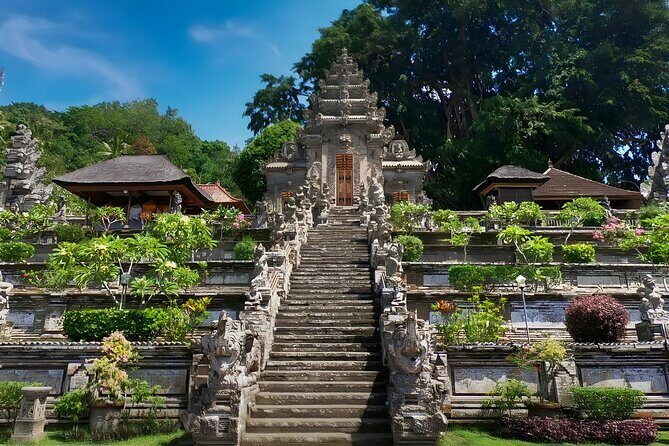
Next comes the big name: Besakih Temple, often called the Mother Temple. This complex sits in the village of Besakih in Bali and includes a main temple area plus many assistant temples. The key point for your day is not just that it is important—it is how large and layered it feels.
You’ll have about 45 minutes. In that time, you can cover the main areas without rushing too hard, especially if your driver and local site guides help you keep your bearings fast.
The setting also matters. Besakih is located on the slopes of a volcano, so you get a sense of drama from the geography. That can help your photos look more like a real place and less like a quick snapshot. You’ll also see worshippers and the everyday rhythm of temple life, which can be more meaningful than a staged viewpoint.
Possible drawback: because Besakih is a major complex, the walk from one area to another can feel longer than expected. Build in a calm pace, and don’t try to race to every corner.





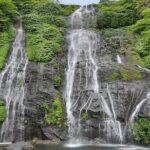
Tirta Empul Temple: Sacred Springs and Watching Purification Up Close

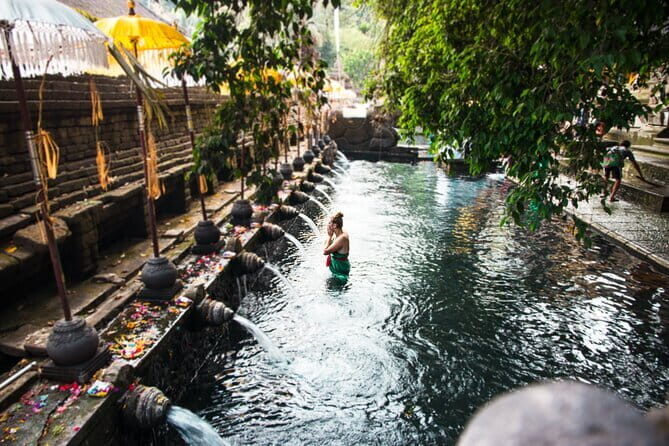
Tirta Empul Temple is the emotional centerpiece of the route. The site is known for its holy mountain springs, and it is also tied to a traditional tale about good versus evil. Practically, the moment that people remember is the purification ritual.
You get about 45 minutes here. During that time, you’ll see worshippers preparing for and using the sacred springs. Even if you are not participating, watching respectfully can be powerful because it shows how living faith shapes daily actions.
A helpful note for your visit: this is a place where you want to behave like a guest, not like a tourist with a camera mission. Watch where you’re allowed to stand, move carefully, and keep your voice low. You’ll get better views anyway.
Gunung Kawi Sebatu: The Rocky Temple and the Step-Heavy Path
Then you head to Gunung Kawi Sebatu Temple, a rocky temple site. This is one of those locations where the journey to the temple is part of the experience.
The key detail here is the walk down: you need to descend into the valley on a couple hundred steps to reach the site. You’ll be there around 30 minutes, which means you should treat it like a practical stop:
- descend with steady footing
- take your photos without rushing
- return without sprinting so you don’t end up tired for the next location
The upside is that the place feels like an archaeological and spiritual combination. The downslope setting can make the carvings and temple features feel more grounded, like you’re seeing them within the landscape instead of on a flat platform.
If stairs are a deal-breaker for you, this stop is the one I would think about most.
Goa Gajah (Elephant Cave): Elaborate Carvings and an Archaeological Feel
Your final major temple stop is Goa Gajah Temple, also known as Elephant Cave. It’s an archaeological site with significant historical value and elaborate carvings, and it sits on the western edge of Bedulu Village. It is also described as being about six kilometers out of central Ubud, which helps explain why this stop often feels distinct from the more central temple complexes.
You’ll have about 30 minutes here. That works best if you:
- take a minute to look slowly at the carvings before rushing
- let your eyes adjust to the mix of stone features and shadowed areas
- accept that 30 minutes is a guided taste, not an all-day exploration
This stop can be a great closer because it mixes visual impact with the feeling of stepping into an older layer of the region’s cultural record. If you’re feeling the fatigue of the long day, this is still doable—just pace yourself.
Driving, Timing, and Why This Feels Less Stressful Than Self-Driving
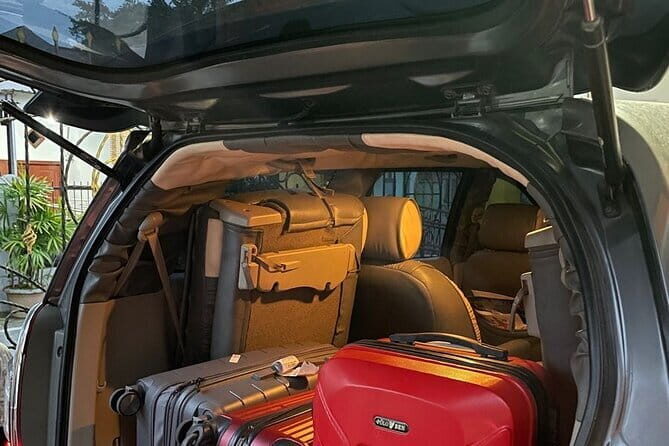
The big selling point of this tour is private transportation. You get collected and returned, plus a clean, air-conditioned vehicle. That means you can keep your attention on temple etiquette, photos, and what your driver is explaining—rather than focusing on road conditions.
A well-run day also depends on timing between stops, and this tour’s structure is designed to keep the flow moving. The driver is described as polite, and safety is part of the approach. You also get extra help with navigating the sites efficiently, including picture-taking support from the people assisting at the temples.
Still, I’d be honest: this is a long day. Ten hours can include lots of driving time plus walking time at each location. If you’re someone who wants a slow wander, you may feel rushed in the later stops. If you end up feeling behind schedule, prioritize the sites that matter most to you.
Cultural Notes That Make Your Visit Feel Respectful
Because this tour includes worshipping sites and purification rituals, a few simple habits help your whole experience:
- Keep your voice down in the temple areas where people are practicing.
- Move carefully around locals who are engaged in rituals.
- Wear appropriate covering when needed—this is where a sarong becomes practical, not optional.
- Dress for walking. Comfortable shoes are not just about comfort; they help you move with care on uneven temple terrain.
If you want your day to feel more authentic, these small choices matter. You’ll feel less like you’re passing through and more like you’re joining the rhythm of the place—briefly, respectfully, and on your best behavior.
Who This Tour Is Best For (and Who Should Skip It)
This tour is a strong fit if:
- you want five major temples in one day
- you prefer not to self-drive through narrow roads and traffic
- you like structured timing, with a guide to help you make sense of each stop
- you value hotel pickup and a reliable vehicle to keep the day smooth
You might want a different plan if:
- you have limited mobility or hate stairs (Gunung Kawi Sebatu involves a couple hundred steps)
- you want long, quiet time at one or two sites rather than a packed route
- you expect lunch and snacks to be handled for you (they are not included)
Should You Book This Temple Route?
If you have one day and you want the highlights—Besakih, Tirta Empul, and Goa Gajah plus two more classic stops—this tour makes sense. The price is reasonable for what you get: air-conditioned transport, a professional English-speaking driver, and a private setup that reduces stress.
I’d book it when you can handle a full itinerary and you pack for walking. If you’re sensitive to long days, then prioritize your must-see temples and treat the rest as bonus moments.
The best way to get value here is to plan ahead: bring your sarong, wear shoes built for stairs, and budget extra for entrance fees and your meal. Do that, and you’ll end the day feeling like you actually saw Bali’s temple culture, not just drove past it.
FAQ
Are entrance fees included in the tour price?
No. The package states that entrance tickets for the temples are not included, so you should budget for tiket masuk wisata at each stop.
How long is the tour?
The duration is listed as about 10 hours.
Is pickup and drop-off included?
Yes. The tour includes private round-trip transfers from Ubud and south Bali hotels, and pickup is offered.
Is this a private tour or shared group?
It is private. Only your group will participate.
What’s included in the price?
Included items are bottled water, an air-conditioned vehicle, private transportation, a professional English-speaking driver, petrol, and parking fees.
What is not included?
Lunch and snacks are not included, and entrance fees (tiket masuk wisata) are also not included.
Do I need a sarong or special clothing for the temples?
A sarong is mentioned as required for temple entrance, so it’s a good idea to bring one or plan to obtain one before you arrive.
Is free cancellation available?
Yes. You can cancel for a full refund if you cancel at least 24 hours before the experience’s start time.
Does the tour run in any weather?
The tour requires good weather. If it is canceled due to poor weather, you’ll be offered a different date or a full refund.