REVIEW · KUTA
Surfing Group Lesson Level 1 Beach Surfer
Book on Viator →Operated by Rip Curl School Of Surf · Bookable on Viator
Five surf sessions can change your whole mindset. I love the small-group coaching (up to 5 students per instructor) and the everything-included equipment setup, so you show up ready to learn instead of hunting gear in Bali. The one thing to plan for: lesson times can start early when tides and wind cooperate.
This is Level 1, aimed at real beginners. You’ll practice getting onto waves, learn how to turn, and spend time on ocean safety, using a structured mix of theory and hands-on work during five 2-hour lessons at Legian’s Double Six Beach.
You also get door-to-door round-trip transfers from many South Bali areas, which matters more than it sounds when you’re in learning mode and not in sightseeing mode. Add in showers, towels, zinc, and even a student study book, and the whole thing feels built for progress—at a price that’s mostly about instruction, not logistics.
In This Review
- Key things I’d circle before booking
- Legian’s Double Six Beach Level 1: why this format works
- Your five-day plan: theory plus real water time
- The coaching experience: what “5:1” feels like
- Equipment and comfort: more than just a board
- Daily lesson times at Rip Curl School of Surf: how to plan your day
- Door-to-door transfers in South Bali: the real value of not thinking
- What’s included that you’d otherwise pay for
- Conditions, safety, and your first-wave reality check
- Who this course suits best (and who might not)
- Should you book this $155 Level 1 surf lesson package?
- FAQ
- How many surf lessons are included?
- Where do the lessons take place?
- What level is the course designed for?
- What is the student-to-instructor ratio?
- Are equipment and personal items provided?
- Do I need to bring my own swimsuit?
- Is food included?
- What transport options are included?
- What time are the lessons scheduled?
- What happens if the course is canceled due to weather?
Key things I’d circle before booking
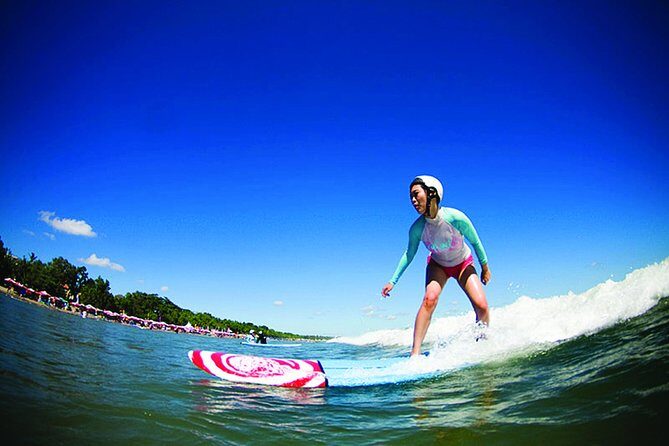
- 5:1 coaching ratio with a pro instructor and assistant support during each 2-hour lesson
- Legian’s Double Six Beach sessions designed for beginners on a famous surf spot
- Full provided gear including rash guard and leggings, imported zinc, and fresh water on-site
- Door-to-door transfers covering Legian, Seminyak, Oberoi, Canggu, Kuta, Jimbaran, Uluwatu, Nusa Dua, and Sanur areas
- Real facilities: private changing rooms, lockers, fresh-water showers, towels, and off-street parking
- Photo coverage during lessons (sold after the program), plus a downloadable study book
Legian’s Double Six Beach Level 1: why this format works
Kuta and the wider Legian area are where Bali surf culture shows up fast—shops, boards, and lots of people trying their first wave. This course chooses Legian’s Double Six Beach for a reason: it’s a well-known training ground, and it’s the kind of setting where you’ll see other beginners learning at the same time.
What I like about the Level 1 setup is how it removes the usual beginner friction. Instead of worrying about wind direction, what kind of board to use, or whether your suit is warm enough, you’re focused on the basics: paddling, positioning, balance, and then the moment you finally catch something.
The course also makes ocean safety part of the deal, not an afterthought. In practical terms, that means you’re getting guidance that helps you surf with more confidence and less guesswork—especially important when you’re brand new and waves are still a mystery.
If you're still narrowing it down, here are other tours in Kuta we've reviewed.



Your five-day plan: theory plus real water time

You’re signed up for five days, with 2-hour lessons each day. The lesson structure blends theory and practice, and it’s aimed at getting you from zero to hero in small steps. By the end, the course promises you’ll have the fundamentals to ride waves, learn to turn, and build ocean safety knowledge.
Here’s how that matters for you day to day:
- You start by learning what to do before you even paddle—basic surf technique, wave awareness, and the “don’t get yourself into trouble” rules.
- Then you move into the hard part: translating what you learn into body position and timing once you’re out there.
- As the days progress, the goal is improvement, so you’re not stuck repeating the exact same motion without feedback.
One smart detail: lessons are scheduled with conditions in mind. Different disciplines and levels can need different tides, wave size, and wind setup. The school says it will try to schedule your course accordingly, so you’re not just showing up to whatever the ocean gives that morning.
The coaching experience: what “5:1” feels like
The biggest practical advantage here is the regular 5:1 student-to-instructor/assistant ratio. When you’re learning, one thing can ruin the whole session: not getting corrected in time. Too many people, and you spend most of your effort waiting your turn.
With a small ratio, you’re more likely to get hands-on adjustments. That’s the difference between doing something wrong ten times and doing it wrong once and fixing it. In the feedback I came across, instructors are praised for patience and professionalism, and names like Budi and Gung show up when people talk about how supported they felt.
You’ll also feel safer because you’re not just drifting around in open water hoping you figure it out. For first-timers, safety is not a vibe—it’s guidance, spacing, and clear instructions in the moments that matter.
Equipment and comfort: more than just a board
Beginner surf lessons can fall apart when gear feels mismatched. This course tries to prevent that with an included kit that covers a lot of the stuff that usually slows you down.
You’re provided with surfing equipment, and the included list calls out:
- Surf board and leg rope
- Rash guard & leggings
- Towel and shower facilities (fresh water, soap, and shampoo)
- Imported zinc
- Sealed drinking water during the course
- A student study book, with soft copies downloadable on the website
The course description also mentions sunscreen and “board shorts” as part of the equipment experience. Either way, the point is the same: you arrive, you suit up, and you spend energy on learning instead of figuring out what to rent.
Facilities are another big deal on Day 1. You get private changing rooms, individual lockers, and private bathrooms, plus a fresh-water shower so you’re not walking around Bali smelling like saltwater. The school also has a chill area with cold drinks, music, tables, and chairs—handy if you’re meeting friends or waiting for your next session.
Humor aside, this kind of setup matters. When you’re new, you don’t want the day to include a side quest: where to store stuff, where to rinse off, and whether your towel is drying fast enough.
Daily lesson times at Rip Curl School of Surf: how to plan your day
Lessons are scheduled daily at 8:00 am, 10:00 am, 1:00 pm, and 3:00 pm at Rip Curl School of Surf. The school notes that different wave conditions and tides can affect scheduling, and they’ll make an effort to place you in the right session for your level.
That means for you:
- You should expect that your “perfect sleep-in plan” might not survive if your course ends up in the earlier slots.
- If you’re sensitive to mornings, build in a little buffer. Early sessions often have the best conditions, and you’ll get more out of the lesson if you’re awake and paying attention.
Also, confirmation of your exact schedule happens one day in advance. So when you get that message, treat it like a key piece of your Bali itinerary. Plan meals and transport around it.





Door-to-door transfers in South Bali: the real value of not thinking
Transport sounds boring until you do a surf lesson day and realize how much time gets eaten by getting to the beach, parking, and finding the right pickup point. This course includes pickup and return transfer from a long list of South Bali areas:
Legian, Seminyak, Oberoi, Canggu, Kuta, Jimbaran, Uluwatu, Nusa Dua, and Sanur area.
The start point is Rip Curl School of Surf by Hotel Prama Sanur Beach. In practice, that means:
- If you’re within the coverage areas, you’re not stuck figuring out local rides each day.
- If you’re staying outside those areas, the plan might be different, but the included transport is clearly limited to the zones listed above.
You’ll also want to keep your phone charged. While the course notes that confirmation is received at booking and the schedule is confirmed one day ahead, you still want your transport and timing details ready when the day starts.
What’s included that you’d otherwise pay for
When you look at the price—$155 for five 2-hour lessons—try not to think of it as “just a surf class.” It’s more like a package where you get instruction plus the extras that normally cost time and money.
Included items you’d have to figure out elsewhere:
- Equipment setup (board, leg rope, rash guard and leggings)
- Imported zinc and hydration during the course
- Fresh-water showers, soap, shampoo, and towel
- Fresh fruits after each lesson
- A student study book (with downloadable soft copies)
- A liability insurance policy listed at One Million USD
- A maximum cap on group size overall (the activity notes a maximum of 40)
You also get photographers taking pictures during the lessons, with photos for sale once the program ends. That can be worth it for a first attempt, since you’ll be too busy learning to remember how you looked on your first successful ride.
Not included: food. So plan on grabbing a meal before or after your session time. If you’re the type who runs hungry fast, pack a simple snack plan around your schedule.
Conditions, safety, and your first-wave reality check
The most honest thing I can say about learning surf is that the ocean controls the session more than you do. Wind, tide, and wave size can change what you feel you’re “supposed” to do. This school’s approach helps because they plan for that reality—they note that scheduling depends on conditions and they’ll make efforts to match the course to tides and wind.
For your safety and progress, pay attention to the instructions and don’t treat the first day like a casual swim. Level 1 is built for beginners, but waves still act like waves. You’ll be guided on ocean safety and basic technique, and the small group ratio helps instructors watch what you’re doing rather than just sending you out.
Also, you should have a moderate physical fitness level. That doesn’t mean you need to be an athlete, but you should be comfortable with paddling effort and getting up and down in the water repeatedly.
Who this course suits best (and who might not)
This course is a strong match if:
- You’re truly new to surfing and want structured coaching, not random board rental time
- You value small groups and want more feedback per minute
- You’d like gear handling, showers, and lockers taken care of
- You want a multi-day course that supports learning progression
It might not be the right fit if:
- You hate early starts, because lesson times can land in the morning to match the best conditions
- You want a totally flexible plan that reacts minute by minute to your personal schedule—this course runs daily sessions at set times
One more point: service animals are allowed, which is good to know if that applies to you.
Should you book this $155 Level 1 surf lesson package?
If you want a beginner surf experience that’s organized, coached, and low-stress, I’d book it. For $155, you’re paying for five 2-hour lessons plus the gear, zinc, showers, towels, and the transfers that remove a daily headache. It’s not just about getting into the water—it’s about getting feedback while you learn.
Choose it especially if you’re the type who would otherwise try surfing on your own and end up spending half your time figuring out logistics. Here, you get the framework: small groups, ocean safety focus, and a steady schedule designed around surf conditions.
If you’re still on the fence, make your decision based on two things:
- Are you okay with morning lesson possibilities?
- Are you happy doing five days in a row to build real skill?
If you said yes to both, this is a solid way to go from first splash to actual surfing habits.
FAQ
How many surf lessons are included?
You get five lessons, each lasting about 2 hours, scheduled across five days.
Where do the lessons take place?
Lessons are held at Rip Curl School of Surf, and they are described as running on Legian’s Double Six Beach.
What level is the course designed for?
This is Surfing Group Lesson Level 1, designed for beginners and people who have never surfed or are still learning.
What is the student-to-instructor ratio?
The course lists a regular 5:1 ratio of students to instructor/assistant.
Are equipment and personal items provided?
Yes. Surf boards and surfing equipment are included, along with rash guard and leggings, towel, zinc, and sealed drinking water. You also have fresh-water showers and changing rooms.
Do I need to bring my own swimsuit?
The course notes that your swimsuit is not included, so you should bring a suitable swimsuit (bikini or board shorts).
Is food included?
Food is not included.
What transport options are included?
Pickup and transfer back to your hotel are included for the listed South Bali areas (Legian, Seminyak, Oberoi, Canggu, Kuta, Jimbaran, Uluwatu, Nusa Dua, and Sanur area).
What time are the lessons scheduled?
Daily lessons are scheduled at 8:00 am, 10:00 am, 1:00 pm, and 3:00 pm, and your exact session is confirmed one day in advance.
What happens if the course is canceled due to weather?
The course requires good weather. If it’s canceled due to poor weather, you’ll be offered a different date or a full refund.