REVIEW · JIMBARAN
Bali Street Food Tour
Book on Viator →Operated by Abadi Bali Transport & Tour · Bookable on Viator
Food first, facts second, then dessert. This Bali Street Food Tour in Denpasar gives you a smart path through local eats, with door-to-door pickup starting from your hotel or port, and a route that mixes a quick history stop with real market time. It’s the kind of outing where you leave with fuller hands and a better read on daily life.
What I like most is the eating plan itself. You’ll get babi guling and bakso alongside Balinese snacks and cakes you won’t see on typical hotel menus, including Kreneng Market favorites like timus and laklak. A big plus is the guides: names like Dede and Yanika show up repeatedly, and you can feel how much they care about explaining what you’re tasting.
One drawback to consider: the focus is heavily on the market circuit. If you’re expecting lots of separate markets and totally different neighborhoods, you might find it a bit more concentrated than you imagined.
In This Review
- Key highlights you should know before you go
- Entering Denpasar from Jimbaran: a street-food route that actually makes sense
- Pickup, timing, and how long you should plan for
- Bajra Sandhi Monument: a quick Bali history stop (with one catch)
- Kreneng Market and the night market: where the food list becomes real
- The dishes to hunt for: babi guling, bakso, laklak, and timus
- Guides turn a food tour into a real explanation of daily life
- Price and value: is $65.03 worth it in real terms?
- Who this Bali street food tour fits best
- Should you book this Bali Street Food Tour from Jimbaran?
- FAQ
- What time does the Bali Street Food Tour start?
- How long is the tour?
- Where does pickup and drop-off happen?
- What foods are included in the tastings?
- Is there a vegetarian option?
- Is admission included for Bajra Sandhi Monument?
Key highlights you should know before you go
- Kreneng Market sweets: expect cake platters with jaja injin, timus, kolak, laklak, and pisang rai
- Classic Bali street food hits: babi guling and bakso are built into the tasting list
- Night market energy: you’re there for dinner-style bites, not just a quick snack stop
- Guides matter here: English ability and food explanations are a common standout, with guides like Yanika and Gede mentioned often
- Private tour with pickup: you get your own group plus round-trip transport from your hotel or port
Entering Denpasar from Jimbaran: a street-food route that actually makes sense
This tour starts in Jimbaran but takes you into Denpasar’s food world, which is useful if you want something beyond the usual resort bubble. The pacing is built around two big ideas: get orientated with a short cultural stop, then spend the rest of the afternoon eating your way through markets.
The pickup is a real quality-of-life upgrade. Door-to-door round-trip transport means you spend less time negotiating rides and more time arriving hungry and ready to taste. You also get a private tour, so it’s not a “herd everyone into the same line” situation.
If you’re the type who likes to ask questions while you eat, this style works well. The tour is structured for tastings and explanations, so you don’t have to guess what’s going on with each dish.
The time window also matters. You start at 4:00 pm, which puts you right on the transition from late afternoon to evening market mode. That’s when many food sellers do their best work, and it matches the tour’s dinner-in-the-market feel.
If you're still narrowing it down, here are other tours in Jimbaran we've reviewed.


Pickup, timing, and how long you should plan for

The tour is listed at about 5 to 7 hours, but in practice the eating route can move faster depending on group pace. One guide experience shared that the trip felt closer to around 3 hours, so think of the official duration as your safe planning number, then be pleasantly surprised if it runs tighter.
Starting at 4 pm is deliberate. You’re not sprinting through lunch crowds. Instead, you’re going when markets and night stalls start to pull people in, which tends to make the atmosphere more food-focused and less “just walking around.”
Also, come ready for multiple tastings. Even the “Come hungry” style feedback is consistent: this is not a token snack tour. You’ll do food tastings and finish with dinner included, so you’ll likely want to eat lightly before you get picked up.
If you’re worried about being stuck waiting, this tour has one advantage: you’re on a schedule with a driver/guide. That doesn’t remove every surprise you might meet in traffic, but it does keep the day feeling controlled.
Bajra Sandhi Monument: a quick Bali history stop (with one catch)
The first stop is Bajra Sandhi Monument, where you get about an hour to see a snapshot of Bali’s history. This part isn’t about a long museum crawl. It’s more like getting your bearings: you’ll see artifacts that help you visualize Bali across different times, and the monument itself blends into modern Denpasar while still keeping a connection to traditional roots.
The key detail for your plan: admission ticket isn’t included. That means you should expect to pay separately if the site requires it when you arrive.
I like this start because it prevents a common street-food problem: you eat, but you don’t know what you’re looking at. Even a brief history primer makes the later market conversation click. When you hear the food terms and local-life context, it lands better.
If you’re not into monuments at all, keep your mindset flexible. The payoff is that the schedule doesn’t waste a huge chunk of your evening before the real eating begins.
Kreneng Market and the night market: where the food list becomes real
After Bajra Sandhi, the tour moves into the Kreneng Market area, with around 2 hours at the market stop. This is the heart of the experience, and it’s where you’ll spend time eating and learning rather than just watching.
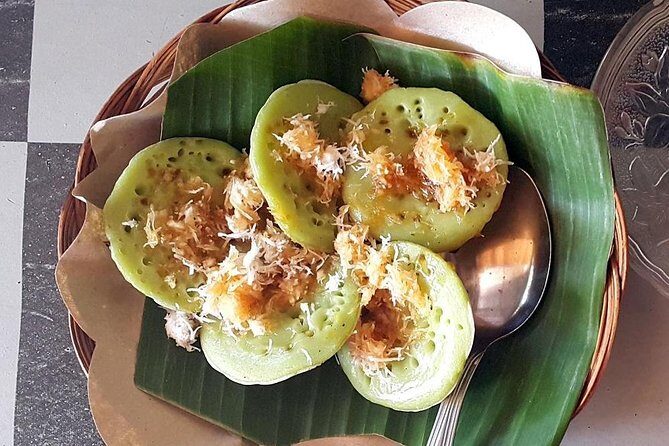
This is also the part built around specific Balinese cakes and snacks. You’ll run into a platter-style assortment that includes:
- Jaja injin (glutinous black rice topped with shredded coconut)
- Timus (sweet cassava cake)
- Kolak
- Laklak (flour base topped with palm sugar and grated coconut)
- Pisang rai
If you’ve only ever tasted Indonesian food outside Bali, this section can be a wake-up call. These aren’t typical street snacks from a generic Southeast Asian menu. They’re flavored and structured around local ingredients and textures, so you get a more honest sense of what people actually crave.
Night market time is where it really clicks. You’re not there for a quiet tasting in a showroom. You’re in the middle of the local food rhythm, and the guide can steer you toward what to try and how to interpret it.
One practical consideration: market areas can feel crowded. That can be part of the charm, but it also means you should wear comfortable shoes and keep your pace steady.
The dishes to hunt for: babi guling, bakso, laklak, and timus
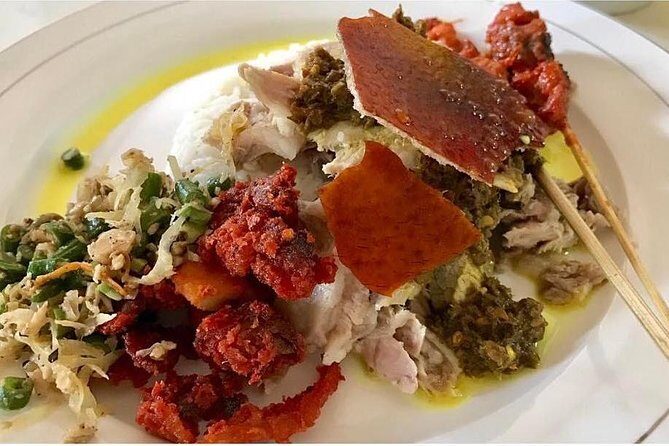
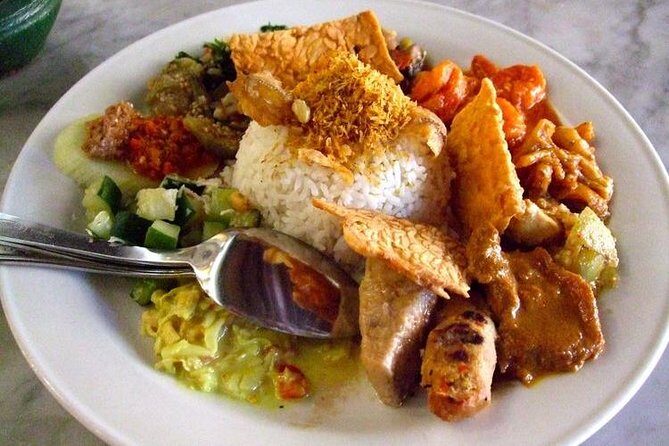
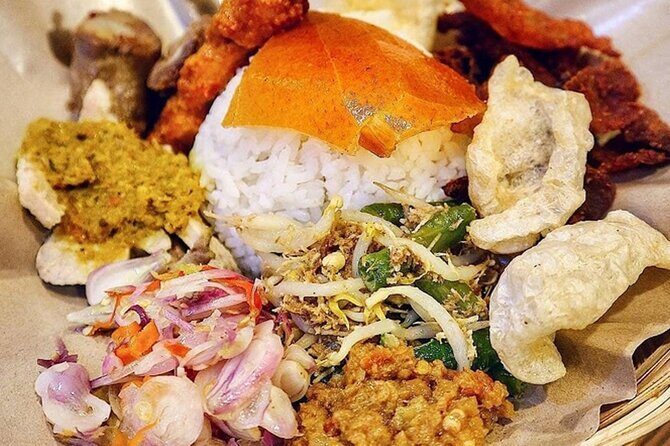
The tour’s tastings focus on recognizable Bali staples plus cake-style treats. You’ll see two “headline” dishes in the plan: babi guling and bakso.
- Babi guling (sucking pig) is one of Bali’s most famous foods. Expect it as a proper tasting, not a single bite-with-no-context.
- Bakso (meatballs) adds something comforting and filling. It’s often a good palate reset after richer flavors.
Then the tour layers in Balinese sweets. Laklak and timus are the big ones named in the market portion, and they’re great examples of how Balinese desserts can be less about pure sweetness and more about ingredients and texture.
If you’re thinking about dietary needs, there’s a vegetarian option available. You’ll want to mention that when you book, since the tour includes meat-based items by default.
Also note what’s included versus not. The tour includes dinner and food tasting, but lunch is not included. Because you start at 4 pm, most people end up thinking of this as an evening meal plus tastings. Still, if you’re coming from an early outing, it’s smart to plan a light pre-tour snack so you’re not starving when the food starts.





Guides turn a food tour into a real explanation of daily life
This is one of those tours where the guide name matters, because the best experiences hinge on translation, guidance, and pacing. I saw a pattern of strong performance across multiple guide names, including Dede, Yanika, Asta, Gede, Puthu, and Adi.
Here’s what that usually means on the ground:
- You get clear explanations of what you’re eating and why it tastes the way it does.
- When questions get specific, guides can ask chefs and bring back answers in plain English. Adi’s style is described as going back to the chef and translating details, which is the difference between tasting food and learning how it fits into local life.
- English quality can be a standout. Yanika is mentioned specifically for having very strong English, so if that’s important to you, it’s a good sign.
It also helps that the guides can tailor choices. Asta is noted for adjusting food selections based on preferences, even for a picky eater. That matters because food tours can otherwise be “eat what’s scheduled, no matter what.” Here, you’re more likely to get choices that work for your comfort level.
If you like a hands-on approach, you’ll probably appreciate guides who point out what’s worth trying at each stall and explain the differences between the sweet cakes rather than treating them like random bites.
Price and value: is $65.03 worth it in real terms?

At $65.03 per person, the question isn’t just whether the food sounds good. It’s whether you’re getting enough tasting value to justify the paid guide time plus private transport.
You do get several cost-saving pieces built in:
- Hotel pickup and drop-off
- Transport by private vehicle
- Food tasting and dinner
- A guide/driver for the full route
- A private tour setup
Then you have another value factor: the experience includes types of food that you typically won’t find on standard restaurant menus, especially the market cake range. When a tour includes both classic dishes like babi guling and specific market snacks like timus and laklak, you’re paying for variety you might not be able to build yourself without local know-how.
Compared with piecing it together on your own, you’re also paying to reduce decision stress. Instead of walking stall to stall wondering what’s safe, what’s best, and what’s worth your time, the tour hands you a plan.
Is it perfect value for everyone? Not if you expected a multi-neighborhood buffet of separate stops. One negative point centers on the tour feeling more concentrated around a single market experience. If you want many distinct destinations, you should mentally prepare for a heavier market focus.
Who this Bali street food tour fits best

This tour is a strong match if you want:
- A food-first way to experience Denpasar, not just generic Indonesian dishes
- A guide to explain street food so you don’t leave guessing
- A private setting with door-to-door pickup, which makes the logistics easy
- A mix of savory staples plus Balinese cake-style snacks
It’s also a good option for most travelers because the tour structure is pretty straightforward. If you can handle walking in market areas and you’re comfortable with a crowd-style environment, you’ll likely enjoy it.
If you’re traveling as a family, the tailoring element is a plus. One experience described a guide adjusting choices so even a picky eater was happy.
If you have vegetarian needs, confirm the option during booking so the tastings match your diet as closely as possible.
Should you book this Bali Street Food Tour from Jimbaran?
I’d book it if you want a guided, taste-heavy evening with real market snacks, and you like the idea of learning as you eat. The best version of this tour is when your guide is on point and you’re ready to try things like jaja injin, timus, and laklak alongside big-name Bali favorites like babi guling and bakso.
I’d think twice if you want lots of far-flung, separate stops. This one is centered on the market experience, so your enjoyment depends on how you feel about spending most of the time in that environment.
One last planning tip: if you’re aiming to do this during peak days, book ahead. It’s commonly reserved about 50 days in advance, so don’t treat it like a same-week impulse.
If you’re comfortable with a market-focused evening and you want a guide to make food ordering and understanding simple, this tour is a solid pick.
FAQ
What time does the Bali Street Food Tour start?
The start time is 4:00 pm.
How long is the tour?
It’s listed at approximately 5 to 7 hours.
Where does pickup and drop-off happen?
Pickup and drop-off are door-to-door from your hotel or port, included with the tour.
What foods are included in the tastings?
The tour includes tastings such as babi guling, bakso, Balinese cakes, and market sweets like timus, laklak, jaja injin, kolak, and pisang rai.
Is there a vegetarian option?
Yes. A vegetarian option is available if you advise the provider at booking.
Is admission included for Bajra Sandhi Monument?
No. Admission ticket for Bajra Sandhi Monument is not included, while admission is included for the Kreneng Market stop.