REVIEW · KUTA
2 Hours Private Scooter Lesson in Bali
Book on Viator →Operated by Bali Freedom Way · Bookable on Viator
Learning to ride a scooter in Bali changes everything fast.
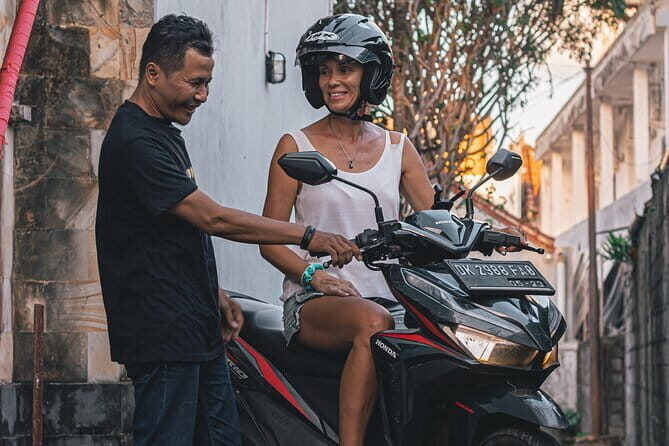
This is a private 2-hour lesson that helps you get comfortable with the scooter basics and Bali-style road awareness without wasting time guessing. I like the mix of quick theory plus hands-on drills (starting, balance, turning, braking) and then the step up to riding on a quiet village street once you’re ready. One thing to consider: the lesson happens nearby in training areas first, so you won’t jump straight into high-traffic streets, and you’ll need to have a bit of physical comfort with bike control and shifting balance.
The pickup is also a big plus. You can be collected from common areas like Kuta, Seminyak, Jimbaran, Uluwatu, Sanur, and Denpasar, and you return back to the start point near Jalan Mataram in Kuta. The main drawback is simple: if you’re hoping to master scooter riding in busy conditions immediately, this lesson is designed to build confidence gradually, not test it right away.
In This Review
- Key highlights I’d plan around
- How the 2-hour private scooter lesson actually helps you
- Pickup and where you start in Kuta (so you’re not hunting)
- Step 1: the theory session you actually need before you ride
- Step 2: closed-area practice—acceleration, balance, turning, braking
- Step 3: safety tips for Bali roads (defensive riding style)
- Step 4: the quiet village street practice (the confidence checkpoint)
- Private instruction matters more than you think
- What you’re really buying: a scooter skills foundation for Bali
- Who this lesson is best for (and who should think twice)
- Price and logistics: getting value without overthinking it
- Weather, confirmation, and what can change
- Should you book this private scooter lesson?
- FAQ
- FAQ
- What areas offer pickup for this scooter lesson?
- How long is the scooter lesson?
- How much does the lesson cost?
- Is this a private lesson or a group class?
- What does the lesson include?
- Where does the lesson start and end?
- What happens if the weather is poor?
Key highlights I’d plan around
- Private lesson flow built for beginners, not a group scramble
- Theory first, then practice on acceleration, balance, turning, and braking
- Bali road culture + defensive riding tips (modeled after Gojek-style defensive thinking)
- Quiet village street practice only after you feel ready
- Pickup in major Bali areas, so you spend less time figuring out logistics
How the 2-hour private scooter lesson actually helps you
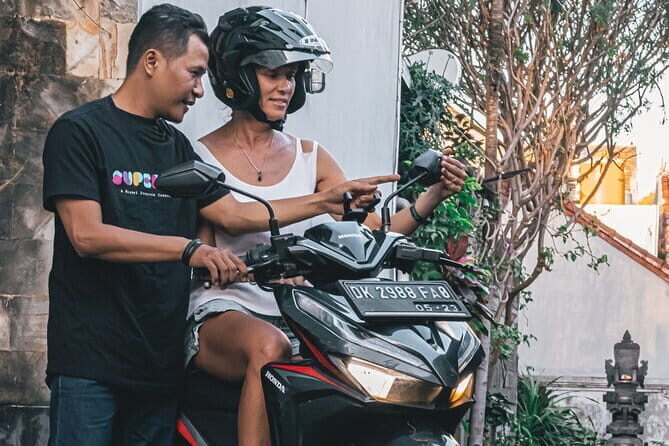
If you’re thinking about renting a scooter in Bali, the biggest problem is rarely the scooter itself. It’s your confidence—when to give it gas, how to brake smoothly, and what to do when the road feels chaotic. This lesson is built to fix that in a short window: you learn the core mechanics, then you practice until you can handle basic street moments calmly.
I also like that the lesson is truly private. Up to one person per group means you’re not watching someone else learn while you wait. The instruction stays focused on what you need, especially if you’re first-timers and your nerves spike when you hear scooters everywhere.
And yes, the value is real even at the modest price. At $31 per group (up to 1), the lesson is basically a shortcut to avoiding the common beginner mistakes that can cost time, stress, or worse.
If you're still narrowing it down, here are other tours in Kuta we've reviewed.



Pickup and where you start in Kuta (so you’re not hunting)
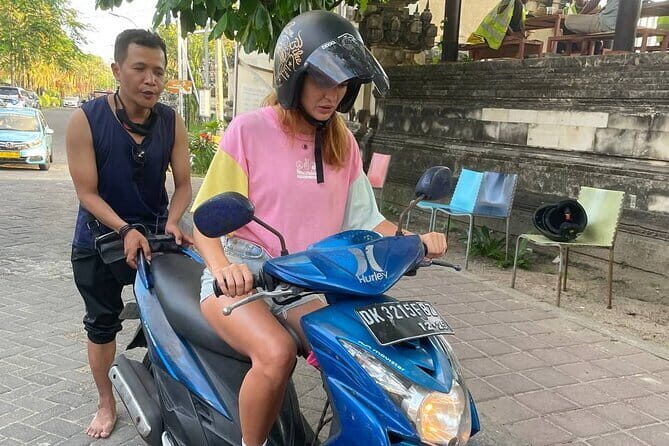
The activity begins with pickup from several Bali areas: Kuta, Seminyak, Jimbaran, Uluwatu, Sanur, and Denpasar. That matters because scooter learning is already mentally busy—you don’t want to spend it trying to locate a specific corner in a traffic-heavy area.
The lesson ends back at the meeting point, so you’re not left planning your own return ride right after you’ve worked up your confidence. The start location is listed at Airport Scooter Lesson on Jalan Mataram, Kuta.
One small consideration: the pickup coverage is good, but the lesson starts near the Kuta area. If you’re far out, you’ll want to think about timing so you aren’t rushing across town to meet the instructor.
Step 1: the theory session you actually need before you ride
Most scooter beginners skip the “boring” parts and jump to riding anyway. Then they get stuck when they don’t understand what’s happening. Here, you get a brief theoretical session explaining the scooter’s mechanics and the function of key components.
That matters because scooter control is mostly muscle memory + clarity:
- You learn what the controls do.
- You learn how the scooter feels under you.
- You get the mental model so you stop guessing.
The instructors described in real experiences also tend to be patient with the basics. One example: I’ve seen instruction that covers how to start the engine clearly, then ties it to what you’ll do next so you don’t feel lost at the first moment you mount the bike. If you’re the type who panics when things don’t make sense fast, this is a good sign.
Step 2: closed-area practice—acceleration, balance, turning, braking
After the theory, you head to a nearby training space—often a parking lot or empty field. That setup is practical: it lets you learn without traffic pressure while you build basic control.
During this phase, you’ll work through core skills:
- Acceleration: how to move smoothly without lurching
- Balance: keeping the scooter steady while you’re learning throttle control
- Turning: making turns without wobbling or overcorrecting
- Braking: learning how to slow safely and predictably
This is where you get your first real confidence. You’re not “learning Bali roads” yet—you’re learning your scooter and your reactions. If the goal is to rent later, this is the part that makes future riding feel possible instead of random.
Step 3: safety tips for Bali roads (defensive riding style)

Once you can control the scooter in a quiet space, you shift to street-readiness. The lesson includes crucial safety knowledge for riding confidently on main roads, with a defensive riding standard taught in the way Gojek drivers ride—focused on anticipating what others might do, not assuming everything will go your way.
You also get guidance on Bali riding culture, which can feel different from other places. Even if you’ve ridden scooters before somewhere else, the road “rhythm” may be new—different habits, different flows, and different moments when you need to react fast but smoothly.
One thing I find especially useful here is the practical focus on how to handle intersections. If you’re a first-timer, intersections are where your brain usually freezes. Real instruction I’ve seen includes step-by-step explanation for how to approach intersections in Bali traffic, not just generic advice.






Step 4: the quiet village street practice (the confidence checkpoint)
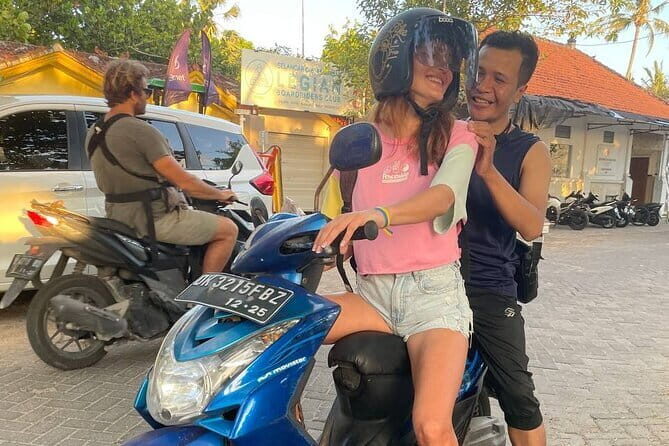
Here’s the smartest design choice in the whole lesson: you don’t ride on real streets until you feel comfortable. Only when you’re at ease do you progress to practicing on a quiet village street.
This isn’t meant to be a thrill ride. It’s a confidence checkpoint. You’ll experience real road feel—street surfaces, typical rider behavior, and the simple fact that you’re not just circling in an empty space anymore.
Why this works:
- It tests your control without turning the lesson into a high-stress situation.
- You learn how your braking and turning decisions feel at actual street speeds.
- You get a small taste of how Bali streets behave—so renting later feels like a continuation, not a leap.
It’s also a good mental trick. You go from anxiety to competence in stages. Several experiences point out that the transition from worrying to feeling comfortable can happen in just two hours when the instruction is calm and patient.
Private instruction matters more than you think

In a group lesson, one of you usually learns faster and one of you struggles longer. That creates tension and delays. With a private lesson (your group only), the pacing can match you.
The result is a more personal teaching style. In real-life examples, instructors have been described as patient and calm—explaining details from starting the engine to handling intersections with clear guidance. If you’re someone who needs reassurance to move from “I’m scared” to “I can do this,” that kind of coaching style is often the difference between enjoying the ride and quitting scooter plans for good.
Also, private instruction helps you ask questions at the moment they pop up. During road learning, waiting until the end can feel painful.
What you’re really buying: a scooter skills foundation for Bali

Let’s talk value, not just price.
At $31 per group (up to 1) for about 2 hours, you’re paying for three things:
- Safety structure: you’re taught what to do and what to focus on
- Time saved: you’re not fumbling through your first ride alone
- Confidence building: you practice until you feel ready
For many travelers, the real cost of not taking a lesson isn’t the scooter rental—it’s the risk of getting overwhelmed, making mistakes, or spending days stuck in “not ready yet” mode.
If you’re already an experienced scooter rider, you might not need as much time. But even then, you can still benefit from the Bali-specific safety and defensive riding ideas, especially if intersections feel unfamiliar.
Who this lesson is best for (and who should think twice)
This experience is a strong match if:
- You’re new to scooters or new to Bali traffic.
- You want a clear path from basic control to real-street feel.
- You prefer a calm, patient teaching style.
- You want help planning how to ride safely on main roads.
You should think twice if:
- You expect the lesson to instantly make you comfortable in heavy traffic from minute one.
- You’re looking for a full “advanced riding” session. This is focused on foundational skills and safe street behavior, not tricks or speed.
Also note the activity says travelers should have moderate physical fitness. If you have any concerns about balance, standing for drills, or physical control while practicing, it’s worth considering that before booking.
Price and logistics: getting value without overthinking it
At $31 for a private 2-hour session (up to one person), the math tends to work for beginners. You’re not paying for a big group tour experience. You’re paying for direct coaching and structured practice.
The logistics are also pretty friendly:
- You get pickup from multiple Bali areas.
- You practice in nearby open spaces first.
- You end back near where you start.
A reasonable expectation is that you’ll walk away with basic control and better decision-making on the road. If your goal is just to rent a scooter the next day and feel safer doing it, this is exactly the kind of learning step that can make that plan realistic.
Weather, confirmation, and what can change
The experience notes that it requires good weather. If weather cancels the session, you’ll be offered another date or a full refund.
Confirmation is received at booking time. That’s helpful if you’re trying to fit the lesson into a tight first week schedule.
Should you book this private scooter lesson?
I think you should book it if you’re planning to ride a scooter in Bali and you’re not already fully confident. The blend of patient coaching, structured basics, safety guidance, and the gradual step to a quiet village street is a practical way to reduce stress. For many people, it’s the difference between renting a scooter with confidence and renting while constantly worrying.
Skip it only if you already ride scooters comfortably in busy areas and you’re mainly looking for an advanced skills program. Otherwise, even if you’re a little nervous, this lesson is built to help you get control first, then build road confidence.
If you do book, go in with one simple attitude: you’re there to learn. If you fight it like a test, you’ll feel worse. If you treat it like practice, you’ll likely leave thinking, OK—I can handle this.
FAQ
FAQ
What areas offer pickup for this scooter lesson?
Pickup is available in Kuta, Seminyak, Jimbaran, Uluwatu, Sanur, and Denpasar.
How long is the scooter lesson?
The lesson lasts about 2 hours.
How much does the lesson cost?
It’s $31 per group (up to 1).
Is this a private lesson or a group class?
It’s private. Only your group participates.
What does the lesson include?
You’ll get a brief theory session on the scooter’s mechanics, then practice acceleration, balance, turning, and braking. You’ll also receive safety tips for riding on main roads, including defensive riding guidance, plus information about Bali riding culture. Then you practice on a quiet village street once you feel ready.
Where does the lesson start and end?
It starts at Airport Scooter Lesson on Jalan Mataram, Kuta, and ends back at the meeting point.
What happens if the weather is poor?
The experience requires good weather. If it’s canceled due to poor weather, you’ll be offered a different date or a full refund.